
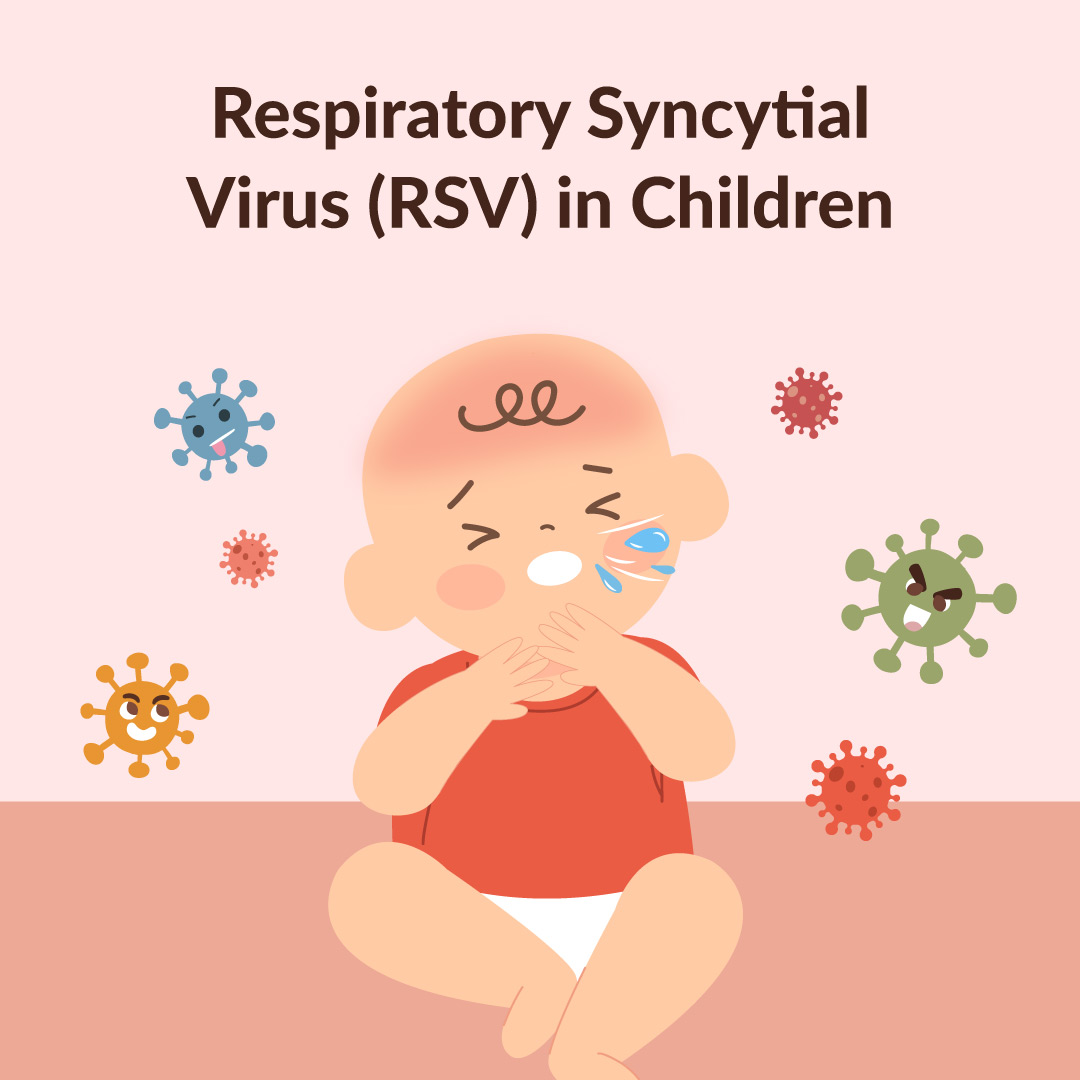
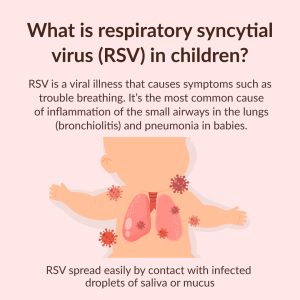
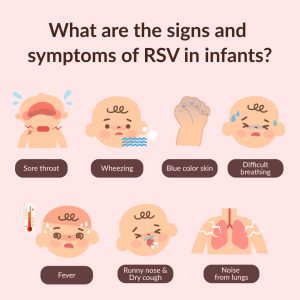
RSV spreads easily through contaminated surfaces or droplets from infected individuals. Symptoms may include a runny or stuffy nose, fever, cough, chest congestion, difficulty eating or drinking, and trouble breathing. These symptoms usually appear 2 to 8 days after exposure and can last up to a week, peaking around day 3. While RSV and bronchiolitis can often be managed at home, it’s important to monitor for signs of dehydration, feeding difficulties, or breathing problems, which may require hospital care.
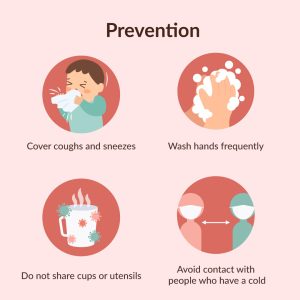
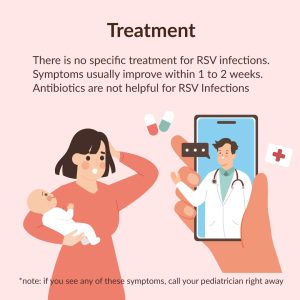
Always consult your GP if you’re unsure. Although there is no specific treatment for RSV, we can help prevent its spread by washing our hands, covering coughs and sneezes, and avoiding kissing small babies.